__________________________________________________________________________________
Re: Ok who’s old enough to remember this place…
We used to have a Showbiz Pizza Place in Bremerton Washington. I remember the bear adn wasn’t there a large bird in a oil barrel? I remember playing games like KRull, Space Ace, Dragon Lair and of course Ski-ball there. I remember they had a blacklight area with more games in it, like Time Pilot. Chuck E Cheese used to be all over around here. I think the only one left is in Tacoma. Showbiz closed in Bremerton in the mid eighties I think. For awhile the building was used for a psychiatric clinic afterwards.
–Melonballer, on Micechat.com (07-20-2006)
My mother never liked teenage boys of a certain age group, from about fifteen to nineteen. If any were around, she would say she didn’t like what the boys were up to and would make an excuse to leave. It was mysterious to me. She was fine with them singly, but despised unattended packs of boys. This is the story of how her aversion came to be. It involves the town of Bremerton, the local West Side high school, and the robot pizza entertainment franchise that inspired Five Nights at Freddy’s. This is the freaky and cheesy tale of the East Bremerton Showbiz Pizzatime Theatre, where a kid could be a kid and a teenager could apparently be the equivalent of a rampaging pack of corrupted Mogwais from the Gremlins series.
Part One: It Was Great When It All Began
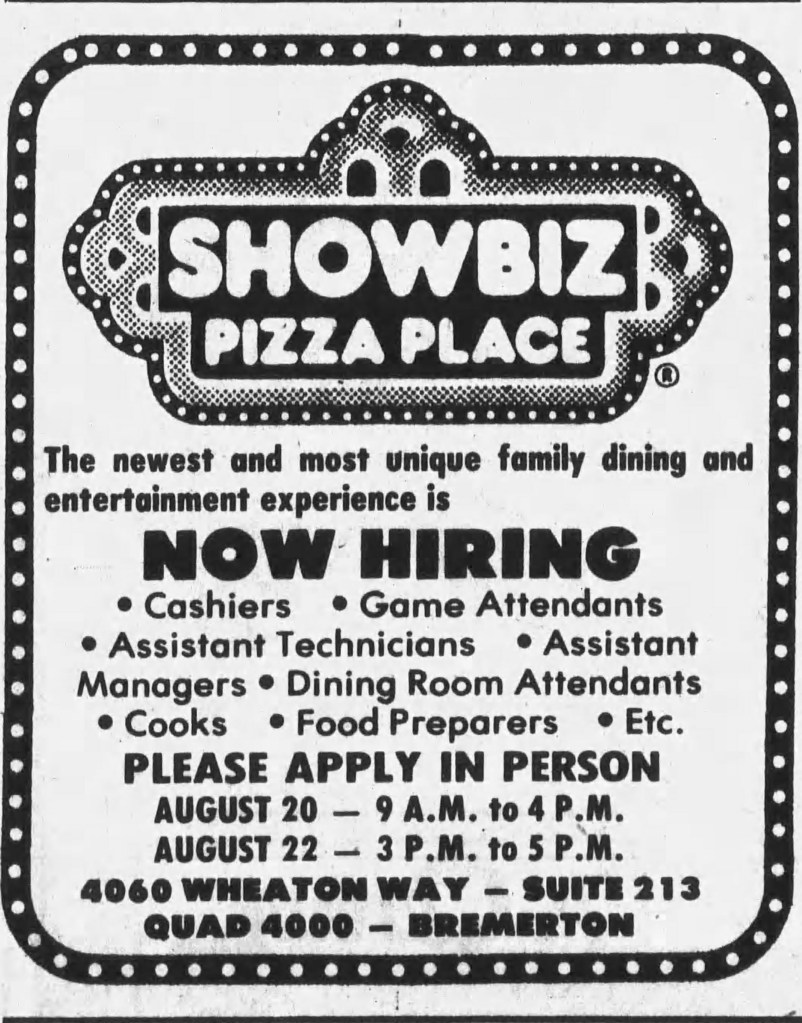
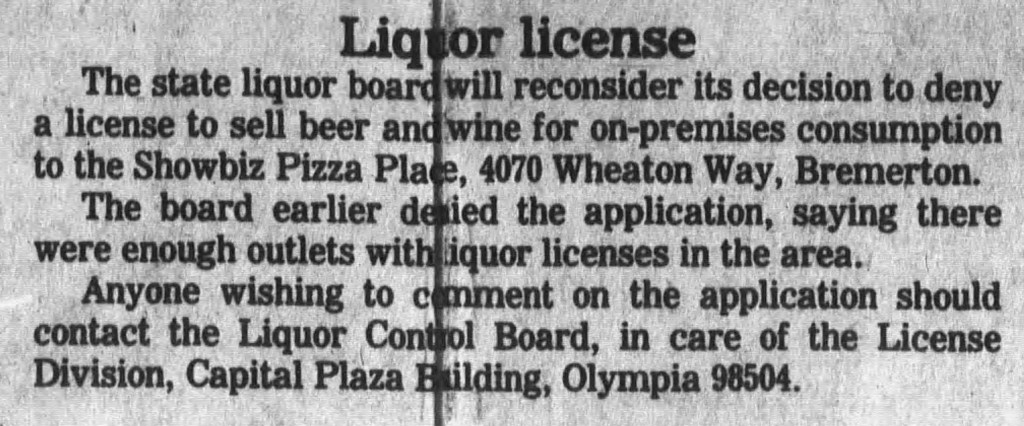
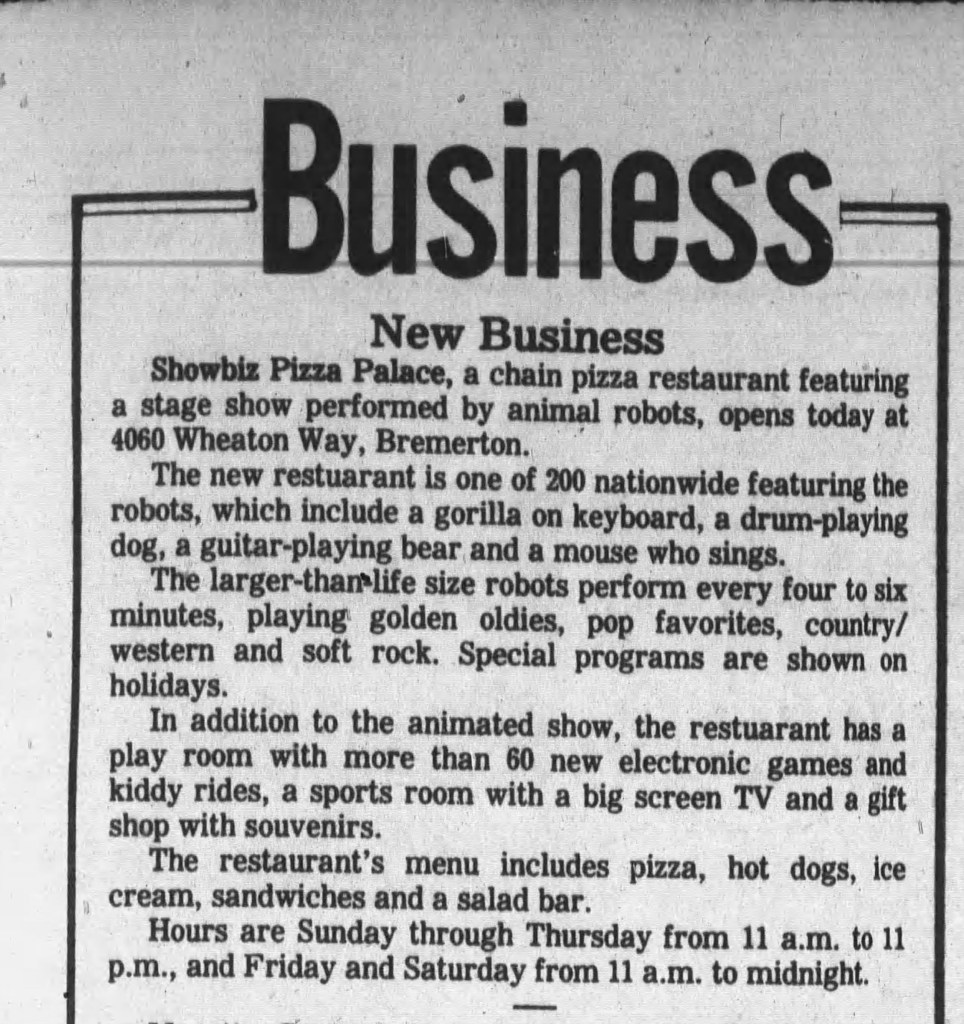
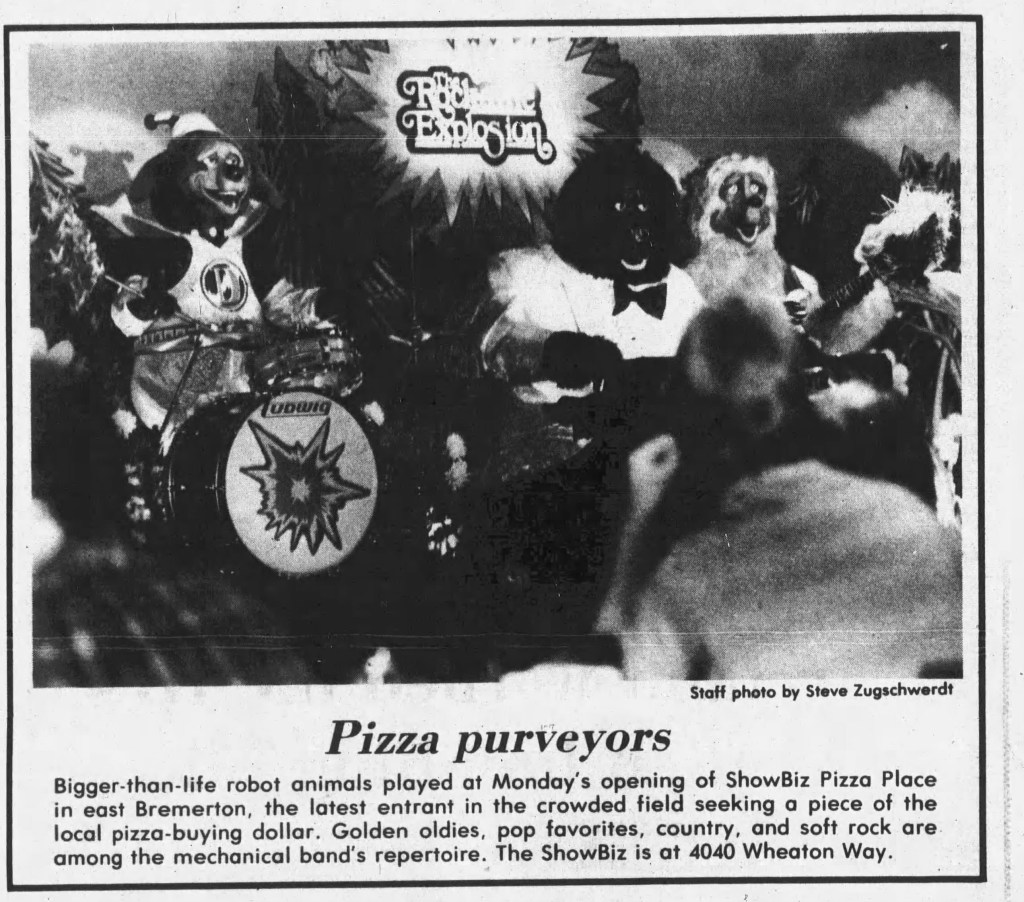
In 1983, the community received two odd gifts from out of state. One was me. I arrived in a sundress and sandals from where we lived in Southern California. The other was a far more spectacular addition, an 11,000-square-foot restaurant that contained a 250-seat dining room featuring a 42-foot, triple Rockafire Explosion stage, 60+ arcade games and kiddie rides, a big screen showroom, a sports room with cable television, and a kitchen serving pizza, ice cream sandwiches, a salad bar, and hot dogs. One thing it did not serve was beer and wine. This was not the intention of its owners, Kitsap Entertainment. Like most Showbiz restaurants, they planned to offer adult libations to provide some much-needed relief to the parents enduring a meal at such a place. But on August 8, 1983, the Liquor Control Board denied the license Kitsap Entertainment had filed a month earlier. Their rationale was ostensibly that too many locations in the East Bremerton area had obtained licenses. But as we shall soon see, they may have had a surreptitious and quite reasonable objection to a music-themed pizza arcade peddling booze.
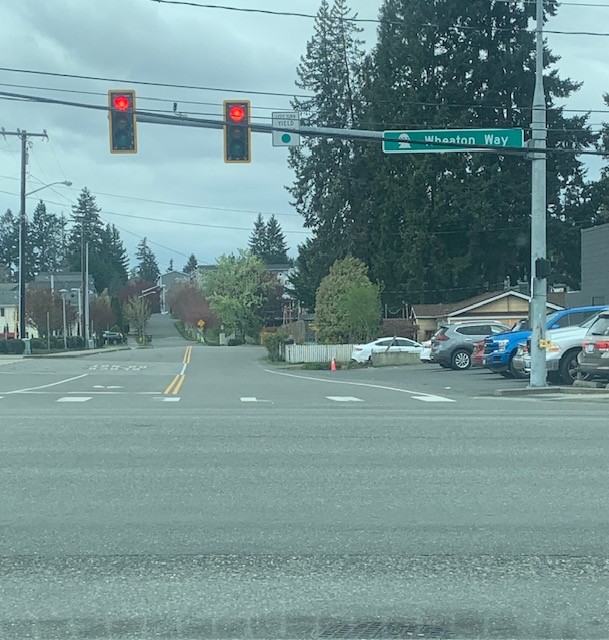
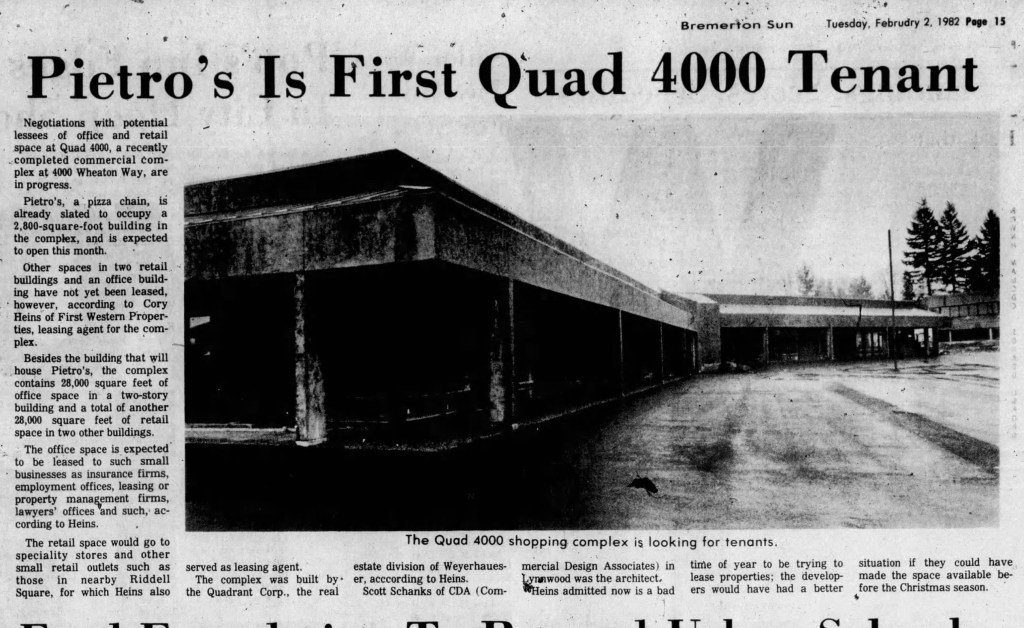
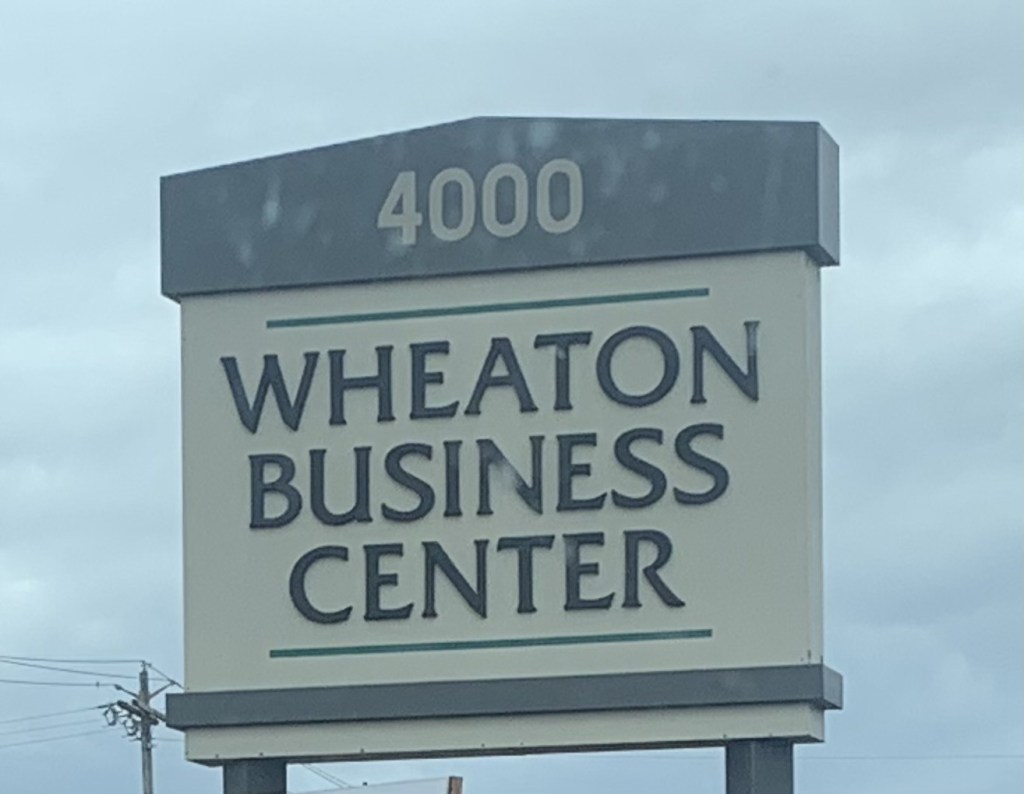
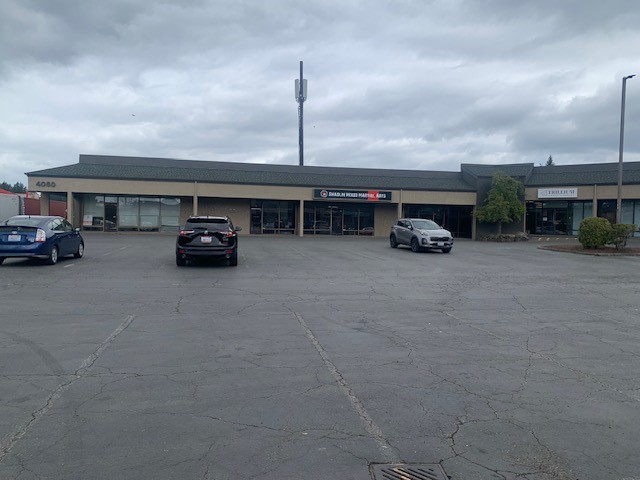
The East Bremerton Showbiz location opened in Quad 4000 off Wheaton Way on Monday, September 12th. I visited sometime between this date and Halloween. The Quad was, at the time, a rather posh 1980s-era commercial complex intended to be a halfway point between the East and West sections of Bremerton. The first tenant was Pietro’s Pizza. It occupied part of a 28,000-square-foot strip mall on one side of the spacious parking lot that stretched before a recessed two-storied late-brutalist office complex.
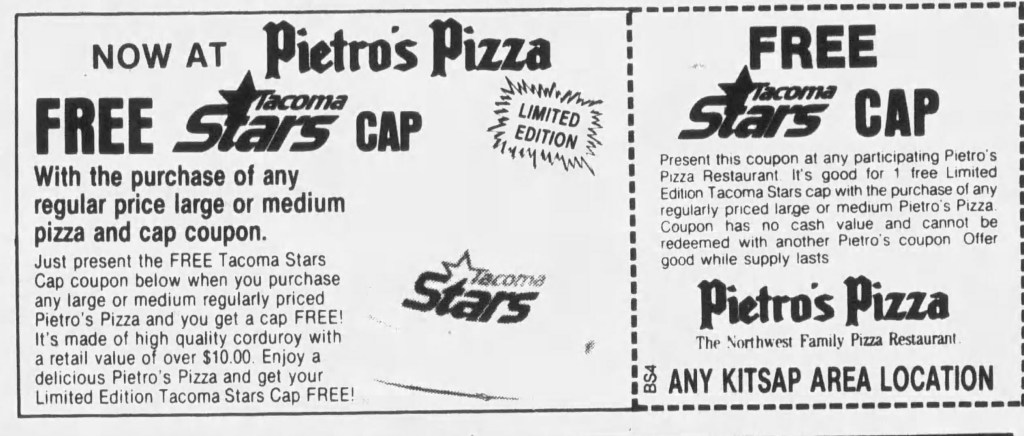
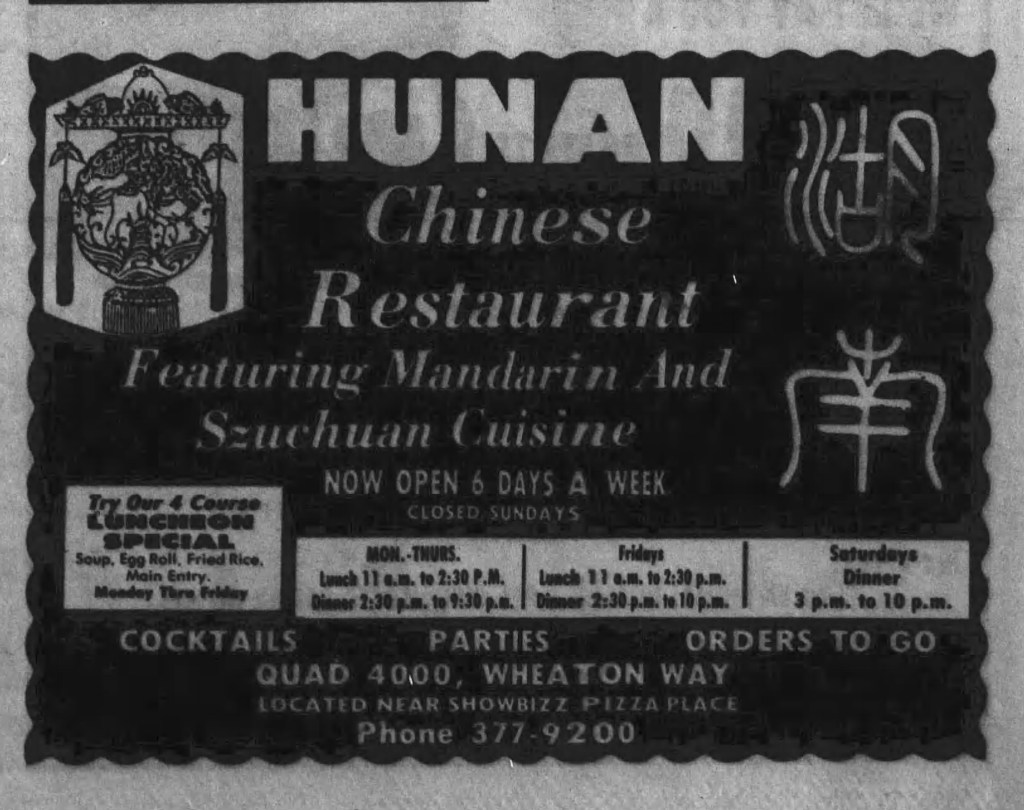
It would later be joined by Hunan’s Chinese Restaurant.
Everything in this complex was beige, brown, and cream. The glass was fogged. The air was full of cigarette smoke. The concrete was pebbled.
My sister and I were told we were going to a place that was like Chuck E. Cheese. I had been to a Chuck E. Cheese in San Diego and had a pretty good time. At this point in my life, I was optimistic about the new city we’d moved to, though I doubted it was as great as my father made it out to be. This feeling would last about a year. It would have worn off sooner, had I been older. Children are wildly optimistic.
We got out of the family blue Datsun 210 sedan and walked to the strip mall that housed Showbiz. It featured the typical signage and fogged glass windows. These kinds of buildings remind me of Commodore bread box machines from that period, and I still find them comforting to be around. I remember the door as having large handles. They may have been brass or black-enameled metal. We entered through the fogged glass front door with many other families. To my immediate right, behind a red and brass velvet rope, was a ball pit. Children screamed loudly in the ball pit. Beyond that, boxed arcade games were neatly lined up in row after row, their soundboxes squawking for tokens. Signs advertised an animal band that was like, but not the same as, the Pizzatime Theatre band. There was a gift shop. We walked along the roped-off red carpet. At last, we came to the place where we ordered and purchased tokens. We were given a tray and a pitcher of soda. We passed a black-lit room lined with games and a smaller room with television sets and sports-themed items on the walls.

Steve Zugschwerdt / Bremerton Su
The floor in a room hidden behind two large black doors was vibrating. If I recall correctly, the song that created the vibrations was Johnny Rivers’ classic “Secret Agent Man” (which means the restaurant was playing the show tape, Best of the Rock-afire Explosion 1983 Part 2).
My father opened one of the doors, revealing one of the most bizarre sights I’ve ever seen. Because of the Internet, people are now familiar with what I’m about to describe. They view it from a safe distance, behind a screen. I was not so fortunate.

Steve Zugschwerdt / Bremerton Su
Outside the Disney parks, few people in the 1980s saw large animatronic entertainment shows. Five Nights at Freddy’s isn’t really an accurate depiction of the technology of the period. Animated toys were rudimentary. Teddy Ruxpin was considered revolutionary. Toys like this were also expensive. The Chuck E. Cheese robots were relatively simple machines with limited movement and were often confined to half-stages.
The Rockafire Explosion was different. It was conceived by an eccentric former Disney Imagineer and Florida-based entrepreneur, Aaron Fechter.
Fechter was an inventor who dreamed of designing an alternative fuel to solve the then-current gas crisis. On a fateful night, Fechter attended a live performance of The Rocky Horror Show in London. As he observed Doctor Frank-N-Furter attaching his victims to the Sonic Transducer and forcing them to sing and dance to old-time rock and roll songs, Fechter had what he felt was a perfectly reasonable reaction to the scene: He decided he should create a robot band of animals and have them sing old-time rock and roll songs to paying audiences. This would allow him the funds he needed to perfect his alternative fuel source and launch the vehicles that would eventually replace gas-powered cars.
Fechter soon produced a band of robots, including a racist, piano-playing gorilla based on Fats Domino, a nearly naked stoner polar bear guitarist, a lecherous wolf DJ, a sexy fox he probably based on Janet Weiss, and a stoned-looking British doggy that played the drums. He called this contraption the Wolfpack 5 and began pedaling it to restaurants as a kind of high-tech dinner theater. He found such an investor in Bill Brock, who desired to create a franchise that could compete with Nolan Bushnell’s Chuck E. Cheese.
For a mascot, Fechter added Billy Bob Brockoli, a country bear from another of his shows called the Hard Luck Bears, along with his drunken, oil-barrel residing sidekick, Looney Bird. To Fechter’s horror, Brock demanded that the singing fox character, Queenie, be changed to a mouse to keep with the pizza theme. By this time, Fechter was deeply enamored with his creation, who was, worryingly, depicted as a teenage prom queen. After some resistance, Fechter complied and modified the robot into a cheerleader mouse called Mitzi Mozerella. He subsequently fell in love with that robot as well, and everyone was happy.
At least, for a while. The pizza-based entertainment racket is tough, and Aaron Fechter is . . . eccentric.
Part Two: I Was a Regular Billy Bob Fan
In addition to the Best of the Rockafire Explosion, Part 2, the Rockafire also seemed to be running a demonstration tape. I say this because Rolf & Earl, the original left side stage act, performed both “Hit the Cymbal” and their cover of “Little Red Riding Hood.” My mother adored Rolf and thought he was the best thing she’d seen since arriving in Bremerton.
Our pizza order was announced on a television screen. I believe we had a vegetarian and pepperoni pizza. The pizzas at this location were surprisingly good, considering that these establishments were not known for their food. A September 10, 1983 Bremerton Sun article mentions the pizzas were baked in a “flow-through” oven and that the dough was “made fresh.” I recall the cheese as being extremely gooey mozzarella.
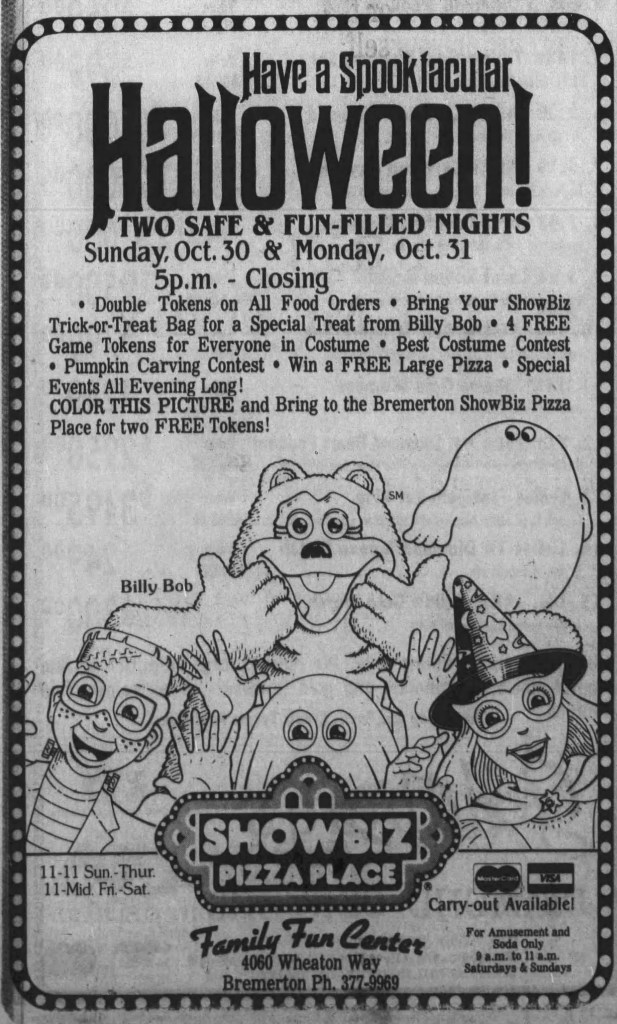
After we ate, we left for the kiddie rides and arcade. As we stood in line for the ball pit, a commotion occurred. A teenage girl in a Showbiz uniform was leading a costumed Billy Bob walk-around character through the crowd. The small employee inside the large fur and cloth costume bumbled precariously through the crowd of children, as if Billy Bob had been dipping into Looney Bird’s “gas-o-haul” barrel. The girl guided him up to the front of the ball pit and handed him a basket. The basket was filled with bags containing small toys for the kids.
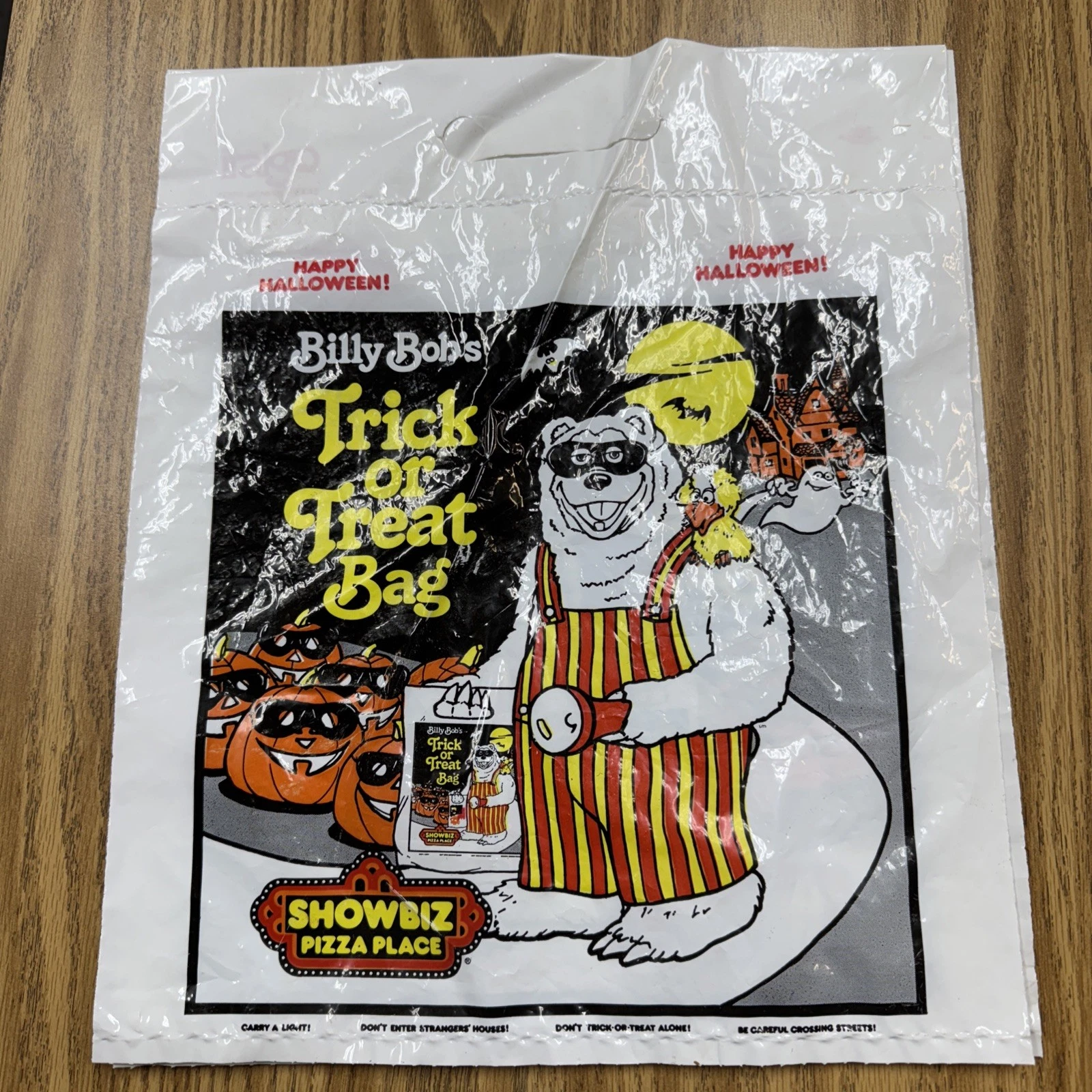
“Look, Billy Bob!” cried the girl. “Look at all the kids here to see you!”
Billy Bob wobbled dangerously. The girl steadied him.
“See, Billy Bob? The kids are right here—No, here! No—okay. It’s okay. Turn. This way, Billy Bob! Would you like me to give them the prizes while you hold the basket? You would! Okay! Let’s hand them out!”
We each got a small bag with a picture of Billy Bob on it. I felt bad for the person in the suit. Whoever it was, they could barely see, and the children would shriek loudly, especially the little ones. So, when I got up to Billy Bob, I gave him a kiss on the nose. Though I may not be recalling this correctly, I remember seeing a mesh in the mask and, below that, two terrified eyes.
“She has given you a kiss, Billy Bob!” the girl explained. “She loves you!”
And after all these years, I still kind of love poor old Billy Bob.
In “Pandemonium Pizza,” Bremerton Sun columnist Christopher Dunagen recalls bringing his daughter to the newly opened Showbiz for her birthday party. Their visit was not as sedate as ours. Dunagen attempted to escape with his daughter’s cake and the guests to the Meeting Room, only to be told it was adults-only. Outside cakes could not be consumed on the premises. The party watched the Rockafire, played some games, and then went outside to light the candles and sing “Happy Birthday” to the young girl. By the conclusion of the piece, he sounds simply exhausted but is happy his daughter has enjoyed her party.
Part Three: But It Was Over When He Had the Plan
Harry Muller was, from what I’ve read so far, a very kind and community-minded guy. He is sometimes listed as the Showbiz manager and at other times as its owner. Muller wanted Showbiz to be a safe place for the community to gather, and he included everyone who might be interested in the restaurant’s various aspects. In doing so, Harry Muller has made a tremendous mistake, an error that will haunt him during his entire tenure at this Showbiz.

Steve Zugschwerdt / Bremerton Sun
My mother remembers Muller as a thin, besuited man who was always at the establishment. He was a chain-smoker. She wondered if he ever rested or ate. As the shows played, he would pace around the birthday room, making sure everything was in order and that the Rockafire was functioning correctly.

Steve Zugschwerdt / Bremerton Sun
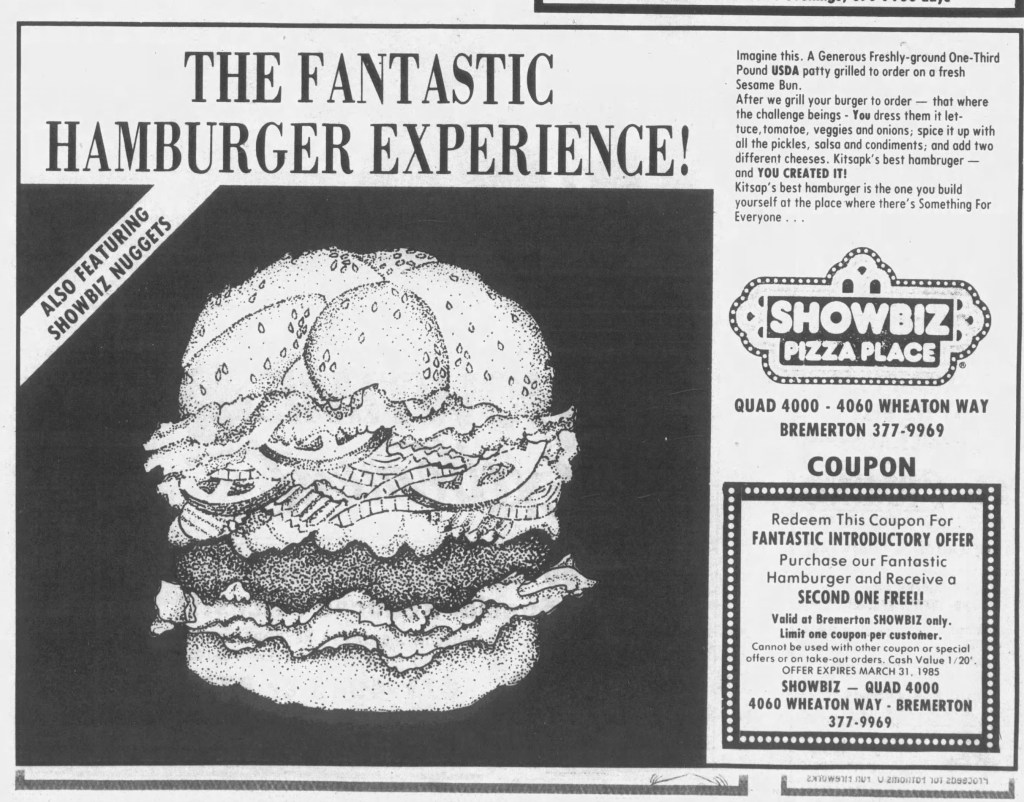
Outside of the restaurant, Muller was a community fixture. A boxing enthusiast, he worked with local radio station KBRO and American Legion Post 149 to tape boxing boilers and show them in the Showbiz Sports Room. Muller also taped Bremerton High School basketball games and showed them to the athletes and their parents. He did this for free.
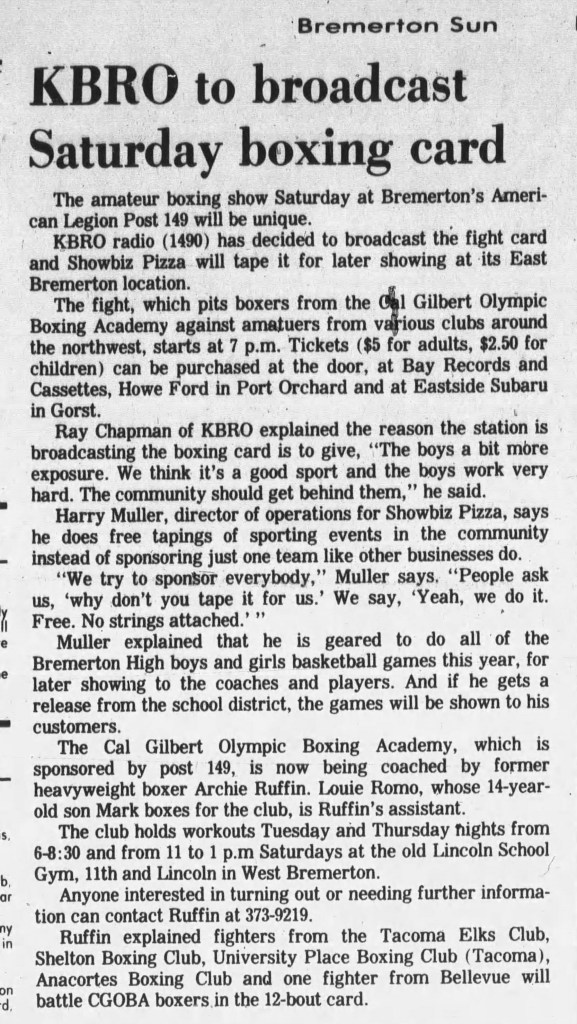
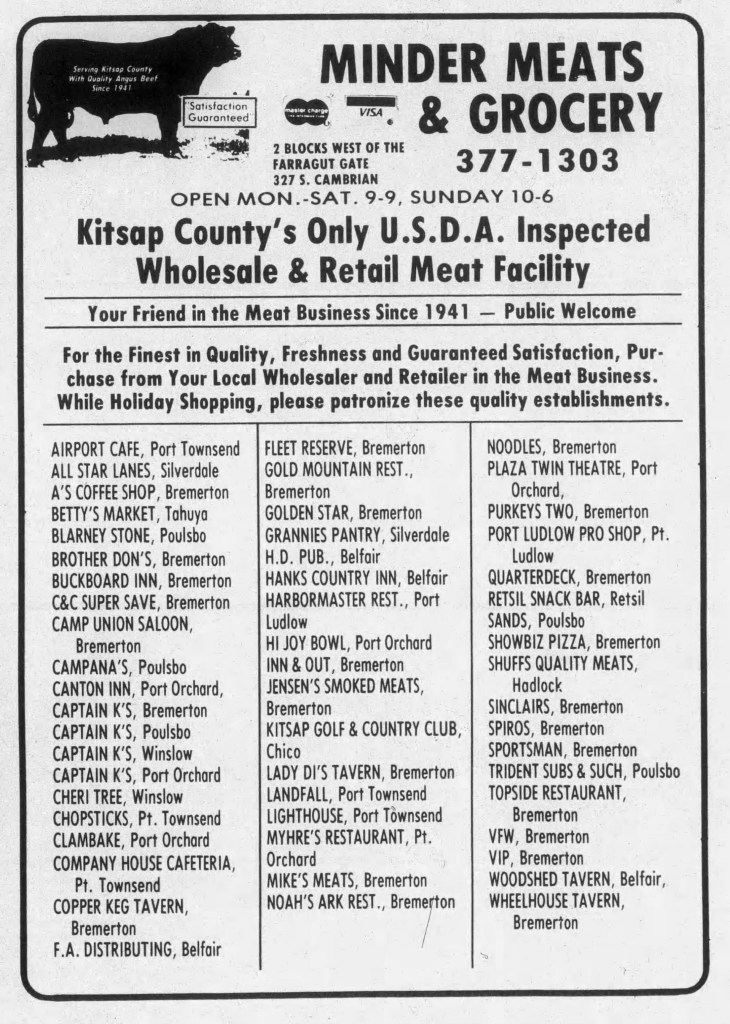
The Showbiz began offering “Make Your Own” hamburgers made with meat from local Minder’s farm, as well as All-You-Can-Eat soup and salad combos.
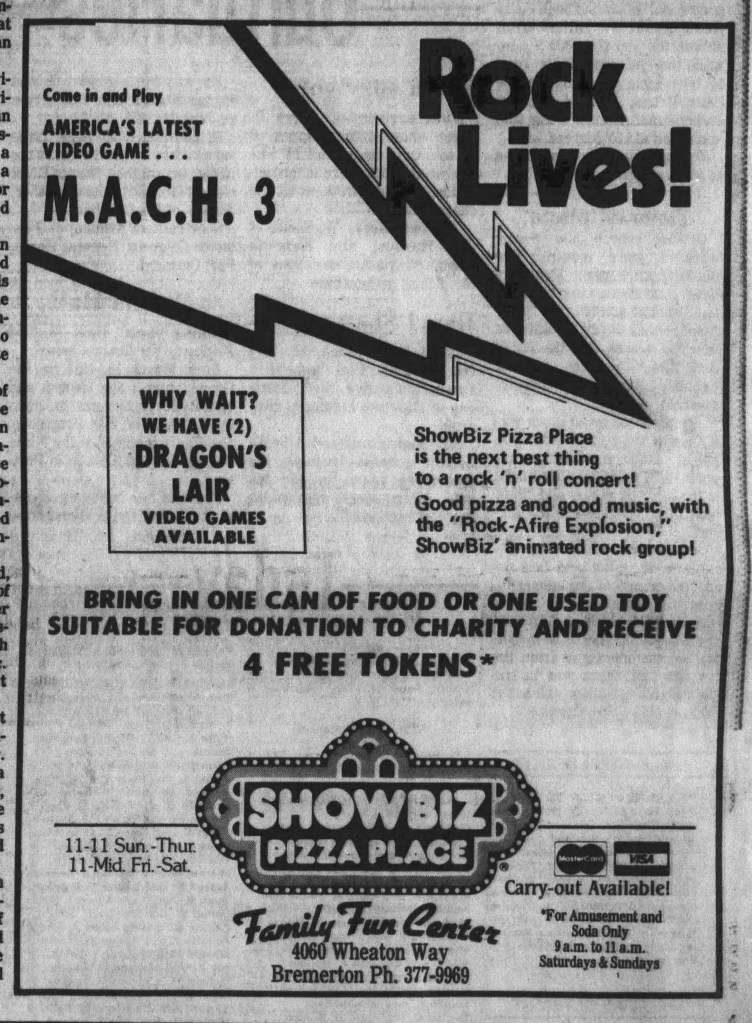
The arcade featured two Dragon’s Lair Machines and a Star Wars game. It later added a M.A.C.H. III cabinet.
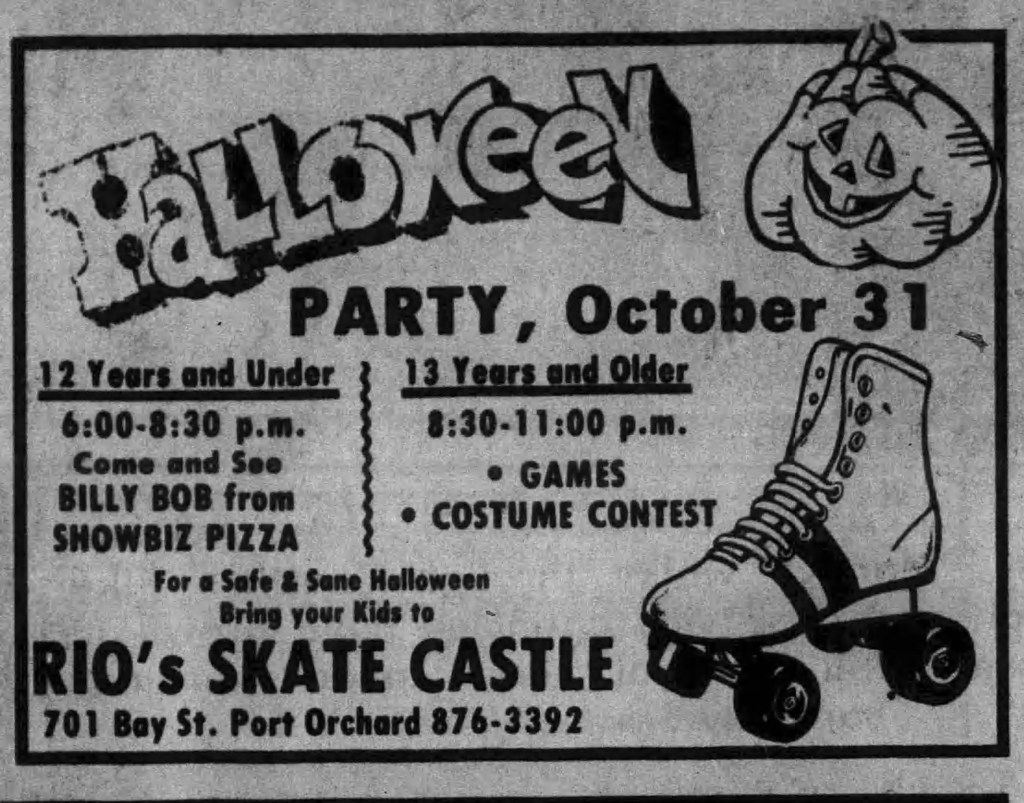
Billy Bob, who had presumably gotten a bit better at navigating his clunky walkaround costume, appeared at a Port Orchard skating rink’s Halloween event and at a St. Patrick’s Day Parade in Winslow.
Through these efforts, the Rockafire became known locally. I recall discussing it with a neighbor boy, who said there was a rumor that Fatz the gorilla was roaming the town at night, eating children. If you looked at Fatz as the curtain closed and his eyes glowed red, then you were the next victim. My neighbor did not stay in town long enough to see the true terror of the Rockafire and learn that Fatz was not the final boss of the robot band. But even though not all the talk was positive, the silly rumors still interested kids. Despite this, Harry Muller’s kindness was about to bite him right in the frontal lobe.
I’m not sure what was wrong with the 1984 class at Bremerton High School. Maybe they had watched the film The Class of 1984 and become inspired. For whatever reason, gangs of teenage boys began to frequent East Bremerton in the late nights and evenings. I remember a large group wheeling a cart into the Value Giant paper goods aisle. They began throwing package after package of toilet paper into the cart, as one admonished his friends, “Make sure you get the cheap stuff.”
“Those boys are up to no good,” my mother commented. “We should get out of here.”
The gangs created traffic accidents. They mooned my mother as they drove past her car. They wrote, “FUCK OFF!” in large letters on the side of the Value Giant, over by where the Can Man used to collect aluminum in his truck. They wrote Hüsker Dü on a light pole by the gas station at the corner of Highway 3 and Riddell. It stayed there for years.
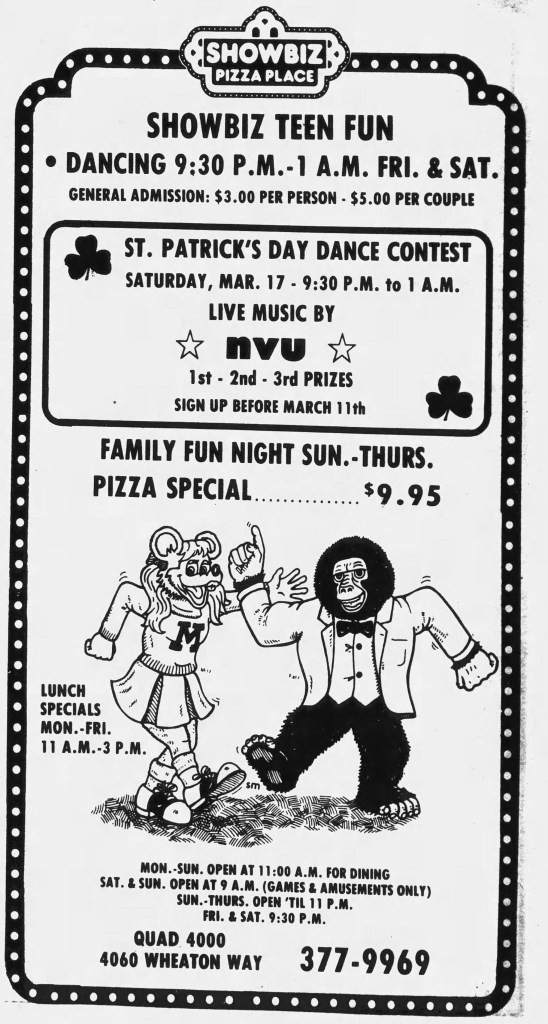
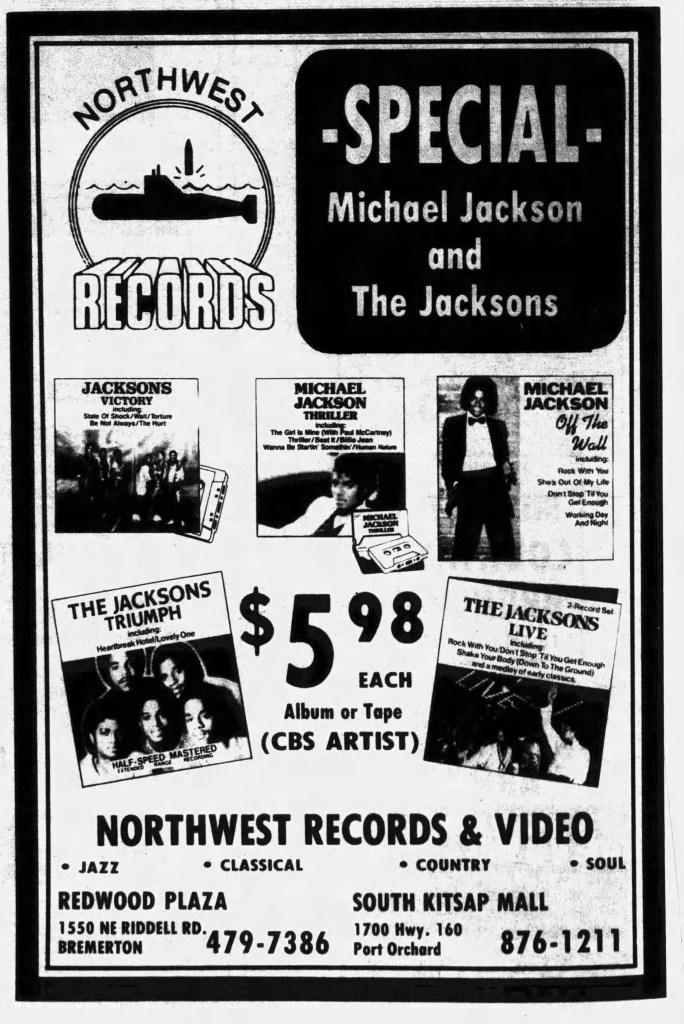
Harry Muller thought he might have a solution. With the help of assistant manager Michelle Sanborn, he created “Dance Nights” for the teens. During these events, they would be able to listen to “soul music,” break-dance, and play arcade games. He would offer them free pizza when he could. And for most of the early months of 1984, it seemed to be working. The Showbiz team began phasing in live music from local bands, starting on St. Patrick’s Day with Nvu. The cover was $3-$5 per couple. Ticket stubs could be redeemed for game tokens, beverages, 10% off food, or a media discount at Northwest Records at Redwood Plaza and the South Kitsap Mall.
But then a “racial” brawl occurred in March between two B-Boy dance crews, one being a group of BHS students known as the Dominos. This apparently led to the dismissal of senior class president Dwight Proteau, who was working as a DJ at the events. Proteau objected loudly to the local paper over the removal of “soul music” from the dances, which he felt made it impossible for the crews to breakdance.
The Dominoes’ leader, Terry Matthews, was also interviewed. He revealed he was a former juvenile delinquent, affected with a social disease only curable by breakdancing, which had saved his young life. Without breakdancing, he would possibly have resumed adding to his existing felony record. (Note: I have no way to verify if Matthews is exaggerating. He is a teenage boy here.) As first place winner in the dance contest, he demanded the resumption of the “soul music” genre at Dance Nights. (I do hope you have realized this was a code word for “rap,” Dear Reader.) He also revealed that the local NAACP chapter had sponsored the Dominos on a free trip to New York so the up-and-coming team could audition there, as they showed great promise in the B-Boy dance style. The real problem, Matthews felt, was that “street people” were attending the Dance Nights and causing havoc. The teenagers needed the dance night, or there would be nothing to do–literally nothing. Everyone was very sorry and hoped that Muller would restore the event to their liking, so there would be no consequences for society.
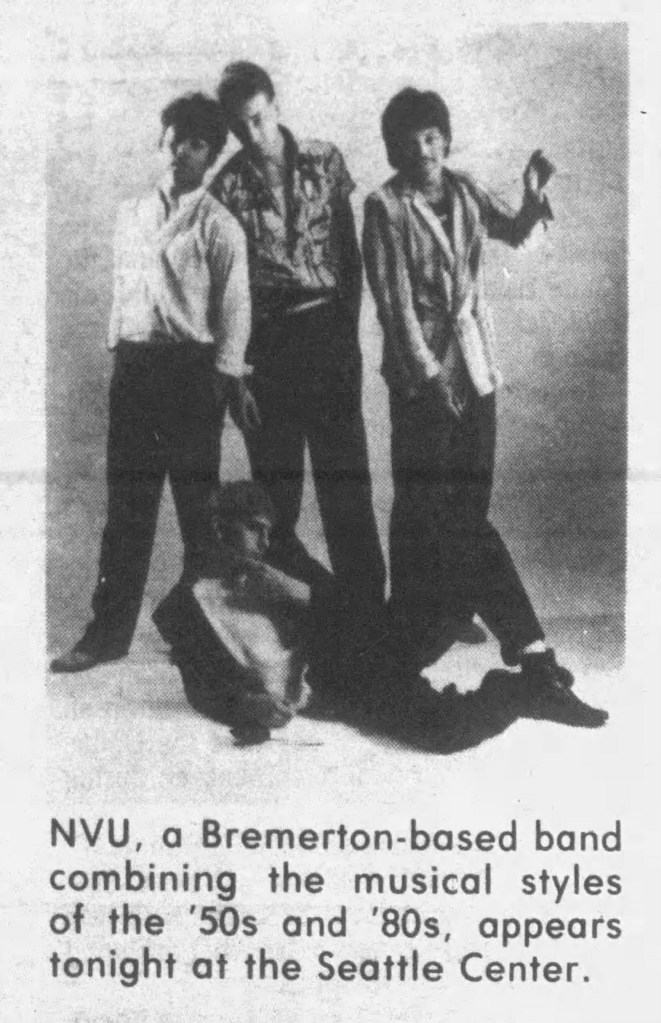
Muller admitted he had, at this point, lost “control” of his restaurant to posses of breakdancing high schoolers who were being all racist against each other, especially when they played their strange newfangled “soul” music. He said he was now calling for customer feedback. He was considering memberships for the teens that would include their parents’ phone numbers. He reminded them that most Showbiz locations did not even allow anyone under 18 to enter without a parent. This was a family establishment. Its mascot was a singing bear in overalls.
The article was followed by two letters to the editor. One is from a person who sounds suspiciously like Christopher Dunagen, though I may be mistaken. He reports with alarm that Proteau has started a Showbiz boycott, that Muller is trying to work with the teens, and that a reasonable compromise is needed. This letter is followed by an editorial piece that reads like it was written by someone who speaks like one of the boys interviewed. This person says the teens are being unfairly punished for their “unruliness.” It is “too bad” that this has led to a boycott. The author concludes by announcing, “Well, that’s Showbiz!”
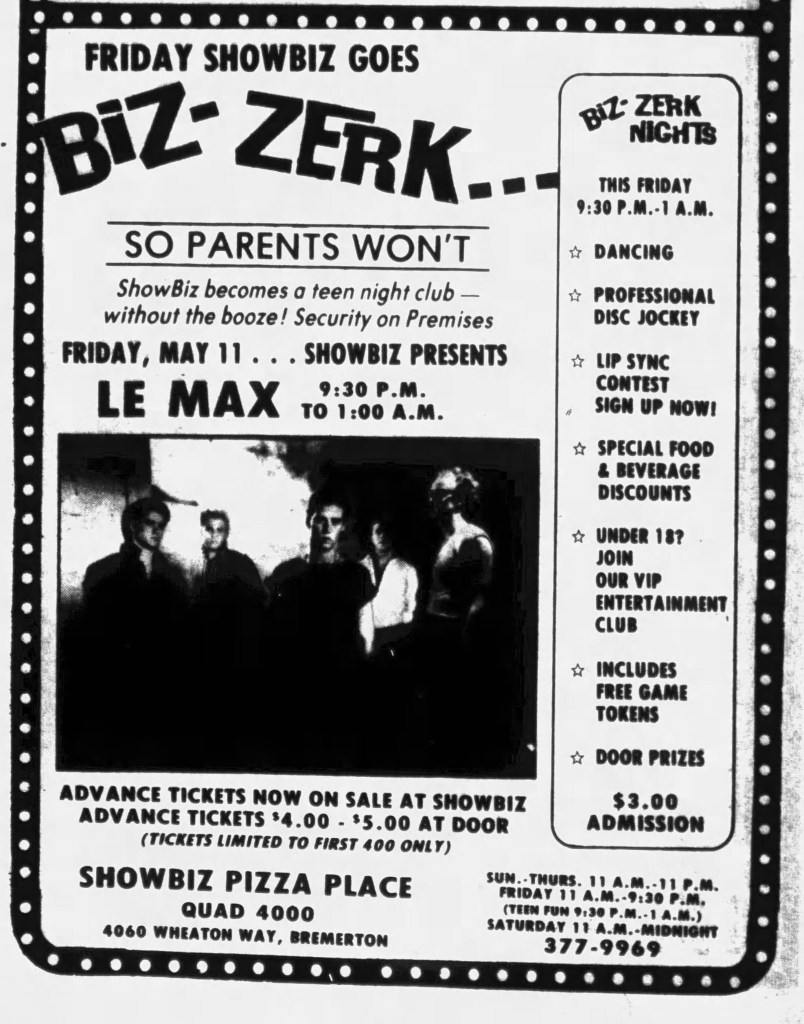
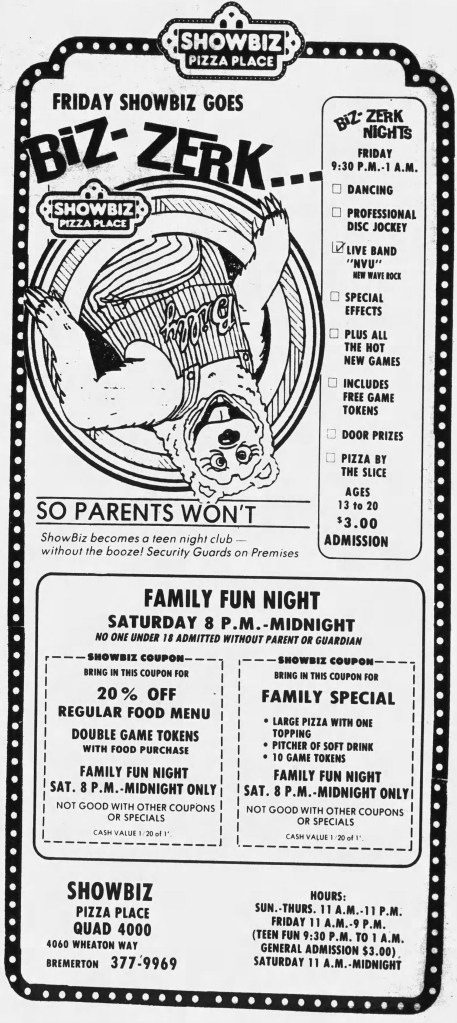
On May 4, 1984, Showbiz announced it was now hiring for multiple positions. The revamped teen nights were renamed Biz-Zerk. They now featured membership for teens and live music by the local band LeMax. Muller honored the East Side Olympic High School AA baseball team champions at an afterparty following their awards parade down Silverdale Way in Silverdale, WA.
The boycotting teens moved on to the local Skippers just down the road from the Showbiz. They refused to purchase food, choosing instead to loiter in the venue after buying drinks, occupying the seats for hours while smoking cigarettes and talking trash. They got into more brawls. The final straw was when the teens somehow managed to cause several thousand dollars’ worth of damage to the exterior of the restaurant after destroying a lantern and ripping the heavy ship’s ropes off the façade.
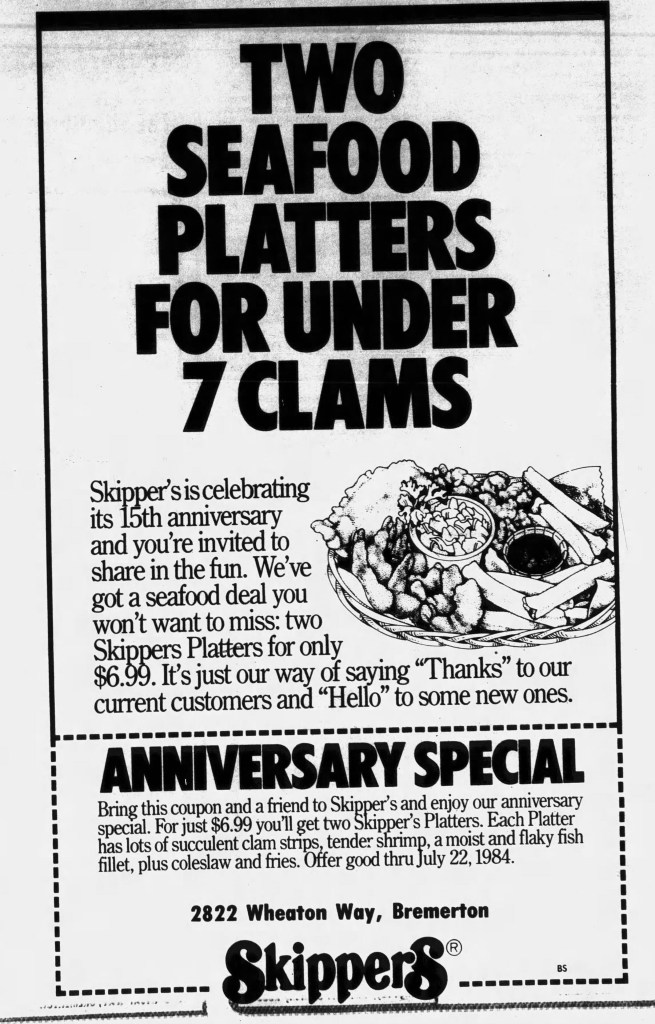
In an act of appalling hatred against the very young, the management of the Skippers overreacted to the kids’ unruliness again, but this time they were banned from the Skippers before they could even organize a boycott. The Skippers’ management then went so far as to station an employee at the door as a bouncer, now checking IDs at the family-friendly fish-and-chips venue as if it were a bar or dance club. This outrage was reported by Sun author Rachel Moen in her September 4th piece, “Skippers Will Ban Students at Lunch.”
Yes, you read that right. These events were happening in broad daylight. At lunchtime.
The Skippers also reported that the kids terrified the senior citizens present and that their business suffered as a result. Fortunately for the seniors, another option arrived in 1985. Harry Muller announced on September 5th that he would begin having “Grandparents Days” at Showbiz. Grandparents could receive ten cents off their order for every year of their age. “We want all the old folks here,” he told the Sun. “They’re often the ones who bring their grandchildren for pizza, then end up footing the bill. This is one way of repaying them.” He also arranged for the Showbiz crew to provide entertainment at the Bellmont Terrace nursing home annual picnic that summer.
Part 4: A Wild Abomination Has Appeared
Sometime around 1985, Showbiz received one of Aaron Fechter’s most elaborate and arguably worst ideas for a robot. Fechter’s company, Creative Engineering, was unable to stick with something just because it had worked in the past. They constantly modified the existing Rockafire robots and planned to produce new characters to compete with Chuck E. Cheese’s rotating cast of guest characters and cabaret acts. The result of creating a new, very sophisticated robot to replace Rolf and Earl was that Uncle Klunk was vomited onto an unsuspecting American public. Described by its own makers as “an Abomination,” the hideous pickle-nosed and cross-legged hominoid was conceived as a Don Rickles-esque stand-up comedian with an irritating pet bird. He sat in a chair, was disgustingly expressive, and could pick up objects on his side table, such as a phone and a banana. Although technically sophisticated for the time, Klunk remains difficult to watch. His character was equally repellent. The troubling act that viewers saw was a toned-down version of the original Klunk. While it is hard to imagine it got any worse than the comedy skits we all saw in the physical locations, I have heard the original and can confirm that, yes, the new version was an improvement.
All I knew was that we visited the Showbiz, Rolf and Earl’s curtain opened, and instead of them there sat before us a vomit-hued robotic monster clown. My mother was simply appalled.
“Where’s the wolf?!” she cried. “What is that thing? What happened to the wolf? I liked the wolf!”
The only idea I could create in my child’s brain was that the wolf had broken. Unable to fix him, the restaurant had replaced him with Uncle Klunk. Nothing would ever be the same with the Rockafire after that, not in my world. I noticed the robots squeaked. Mitzi’s eyes were glassy and dead. Sun and Moon, two background characters that appeared during songs, jerked unnaturally when the Rockafire really got going. Sometimes Billy Bob’s neck looked unnaturally like a kind of snake or lizard when he whipped it around. Strange though it may seem, Rolf and Earl were the key to my suspending my disbelief that the Rockafire was a band rather than a collection of machines. I still liked listening to the show, yes. I was not so pleased with watching it. Indeed, it made me kind of ill.
This may have been the same visit where I leaped from a malfunctioning UFO ride and left my sister stranded. My mother was horrified. How dare I leave my sister stranded in a broken kiddie ride?
“I don’t know!” I confessed. “I just panicked.”
And if the kiddie rides could break like that, gears grinding and cracking while remaining motionless and leaving us up in the air, what if the Rockafire broke down? What if it exploded? What if the characters’ faces melted off as they kept singing?
At that very moment, a loud alarm sounded. An employee rushed through the games room, shaking his fist at a pack of teenagers who had deliberately run out the fire door with no other agenda than to trigger the alarm.
“It is bad enough there are all these teenage boys in here,” complained my mother. “You had to go and leave Missy all by herself in the UFO ride!”
Eventually, word trickled back to Creative Engineering and Showbiz that Uncle Klunk was not being well-received by the public. He was hard to relate to because his viewers were human, and he was… whatever that was. To make Klunk friendlier, Creative Engineering plopped the repellent creature into a cowboy outfit and renamed him Country Klunk. The teller of folksy yarns and strummer of banjos, Klunk somehow became, well, even worse.
We visited on September 5, 1985, unaware of the suggestion that we ought to bring a grandparent. I didn’t have anything to bring. Two were dead, and the other two were in Middletown, California. I was becoming ill, and my yet undiagnosed genetic condition made me an object of mockery and extreme bullying, even by my own teachers. I was everybody’s scapegoat and the preferred target for my father and my older half-sister’s abuse. My mother was depressed. The house was filled with arguments. My half-sister’s main hobby was running away to go to parties with her friends, probably at the Showbiz, for all I knew. I would pray for things to be normal for me and everyone else. As we drove around, I would stare into house windows, trying to catch a glimpse of what a more normal life might look like.
On this occasion, across from me sat a small boy, about my age. He was so blonde his hair was white. His eyes were a bright blue. He was with his grandmother, who also had very white curly hair. Uncle Klunk was warbling through his rendition of “I’m My Own Grandpa,” a plausible premise indeed. The boy was fascinated with the robot and its song. He prepared an extensive genealogy of the hypothetical Kountry Klunk Klan and recited it excitedly to his grandmother.
“That boy really loves his grandmother,” my mother commented wistfully.
I nodded.
“Are you upset by that robot?” she asked.
“Yeah,” I said.
“It is creepy.”
“And I think I’m getting too old for Showbiz Pizza,” I confessed.
I didn’t want to be too old for Showbiz Pizza. I wanted to be more like the boy sitting with his grandmother. But things were the way they were, and you just had to accept them.
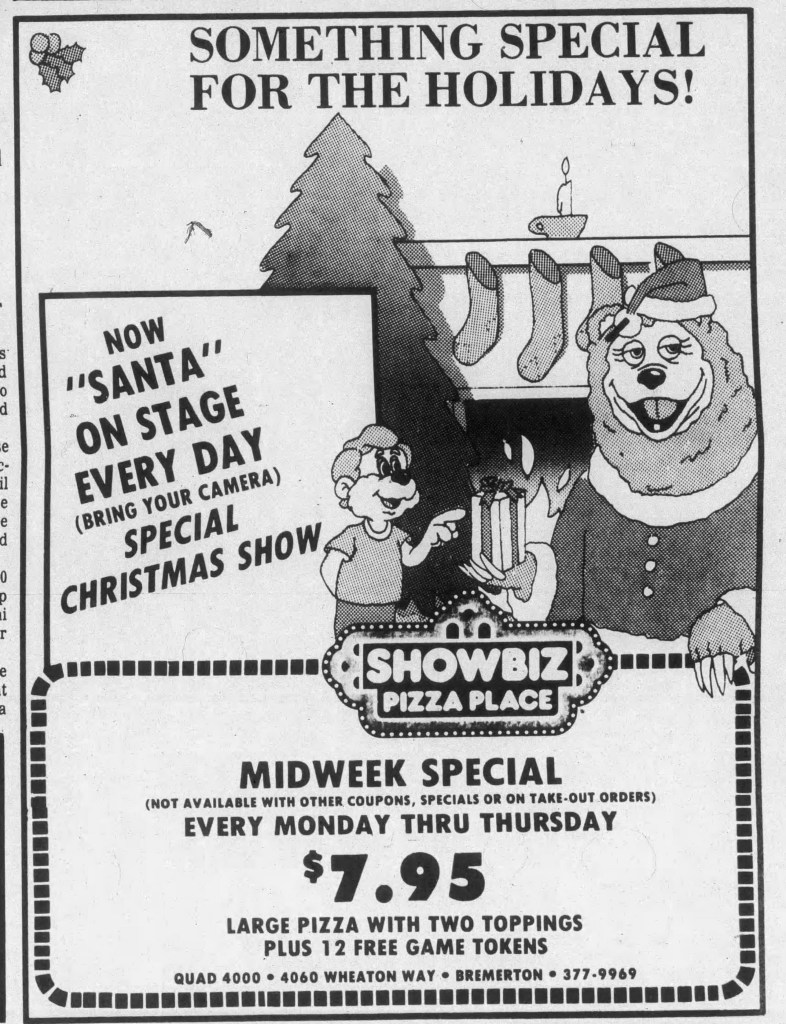
Horrid though Uncle Klunk was, he did have one good use: His robot was retrofitted to play Santa at Christmas time. Muller said the robot came from Dallas, Texas. I never saw it. My father did not like going out to eat around the holidays. He did not like spending money or holidays in general. He preferred to stay home, work on his computers, and get drunk. In school, I dreaded sharing what we were planning to do during the holidays. What was there to say?
But at the Showbiz, Harry Muller was using the Santa robot to raise money for the March of Dimes, a charity devoted to preventing birth defects and helping children who were living with them. For $3.00, parents and children could talk to the Santa robot. $2.75 was donated to the March of Dimes. Unbeknownst to me, the Santa show ran every day in December of 1984.
Part 5: We’re Getting Very Near the End
In May of 1985, Showbiz and Chuck E. Cheese began a merger after a lawsuit and bankruptcy buyout. Aaron Fechter did not handle the merger well. He was given an ultimatum: He could sign away the copyrights to his beloved Rockafire characters, or his creations would be removed from the new combined companies. Fechter chose to leave Showbiz with the rights to the Rockafire. It was a White Elephant gift. Creative Engineering never recovered. Fechter hung on to his decaying offices and robots for decades, convinced that someday the world would come to realize their value, and that a new audience would fall in love with the Rockafire Explosion.
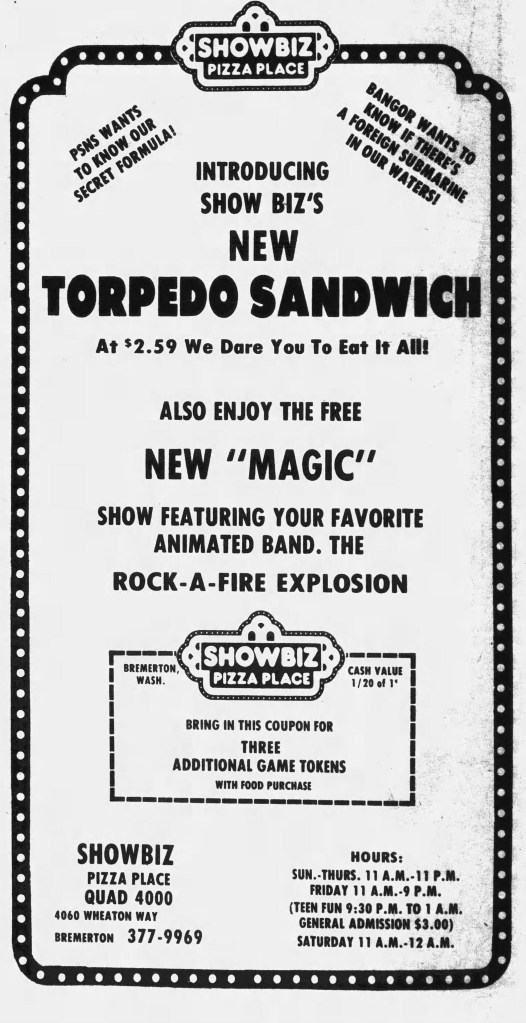
At the Bremerton Showbiz, a new manager was hired to replace Harry Muller. His name was Don Tarabochia. A quiet dining space was created for guests. The kiddie rides were removed to another part of the establishment and were now free. Showbiz arcade cabinets were advertised in the Bremerton Sun. Low-cost hamburgers and Chuck E. Cheese-style pizza combos were offered to the guests. Tarabochia excitedly informed guests that the Rockafire characters would soon be able to converse with them. It was a promise that he probably knew was false.
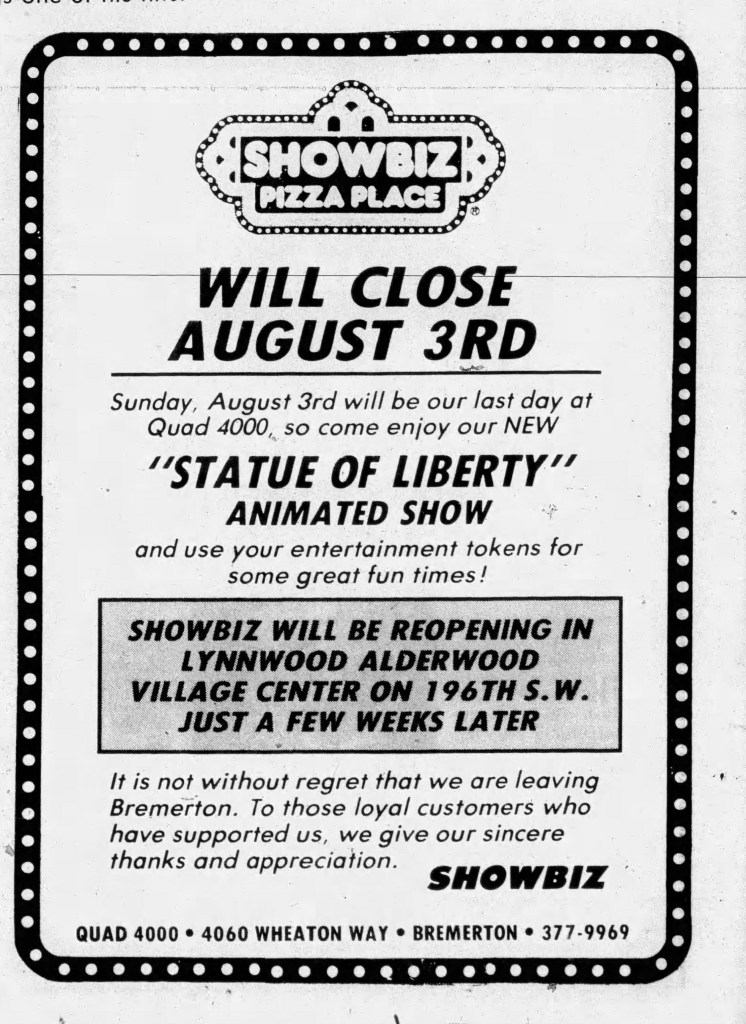
On July 28, 1986, Showbiz ran an ad in the Bremerton Sun announcing that the store was closing and would reopen at Lynnwood’s Alderwood Mall. The final show on August 3, 1986, would feature a robotic Statue of Liberty and a patriotic show tape. “It is not without regret,” the ad concluded, “that we are leaving Bremerton.”
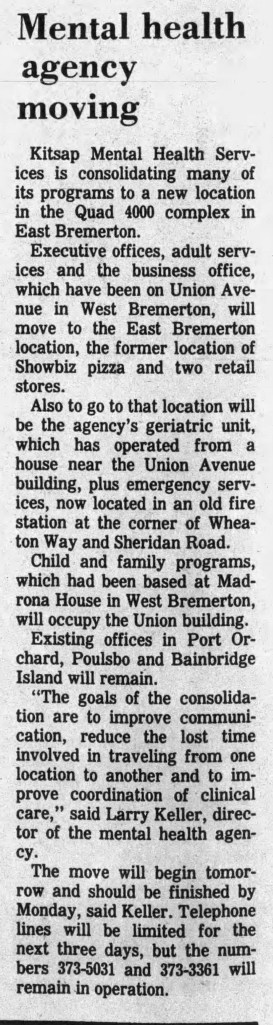
For about a year, the former Showbiz Pizza Place location in East Bremerton sat dark and empty. I often wondered, as we drove past Quad 4000, whether the Rockafire and arcade games were still inside, gathering dust. I would dream about going inside and being startled when the decaying Rockafire suddenly sprang to life.
Then, in October 1988, the local mental health clinic moved into the building. Since this time, it has been a charity. Skippers hung on through the mid-1990s. The once bustling area of East Bremerton began to wither and decay.
I don’t know what happened to Harry Muller. I don’t even know why I want to know what happened to him. Maybe I want to thank him for trying and to apologize to him for how he was treated here. I’ve only received one message about the Bremerton Showbiz location from a family member, and it wasn’t especially forthcoming. It went something like, “My brother-in-law owned this location. It didn’t work out.” That was it. There was no happy ending, because there was no ending at all. Did he go to another franchise? Did he go into making films? Did he do something else entirely?
Dwight Proteau is doing just fine. He currently lives in Port Orchard, Washington, and just held a fundraising event for Republican Representative Michelle Caldier-Valdez. He has a lovely home and seems to be an entrepreneur. Hopefully, none of his businesses will be beset by rampaging teenage boys. Proteau shares his political affiliation with Rockafire creator Aaron Fechter. After a brief cult comeback in the 2010s, Fechter’s eccentricity again got the better of him. He engaged in an acrimonious online battle with a fan, who happened to be a prepubescent autistic child, not a grown man as Fechter assumed. He was accused of overcharging for a tour of the Creative Engineering headquarters. He nearly got into a fistfight with a client, and he repeatedly pulled copyright claims on fan videos of Rockafires. Fechter irritated his neighbors by erecting a massive Donald Trump campaign sign on his property. He then irritated them even more when his alternative fuel source exploded, caught fire, and burned down his lab. Fechter, at least for a while, had a very young wife who bore an eerie resemblance to a human version of Mitzi Mozerella. I do not know if they are still together. Whatever the case, I hope someone is keeping an eye on him, especially since we are currently in the middle of another wave of rising gas prices.
I do know what happened to Terry Matthews, the young man who insisted that he must breakdance immediately or return to a life of thuggery.
You probably know what happened to Terry, too, even if you don’t know him by that name. One of his “street” friends, Sir Mixalot, was on hand to fill us in on his antics. Terry Matthews is the real name of Mixalot Posse Member Maharaji, and he is now more famous for committing documented acts of unruliness on Broadway. Whether you knew it or not, I have just told you the real origin story of Maharaji, the breakdancer from the Mixalot Crew. It all began at the Showbiz Pizza Place in Quad 4000, just off Wheaton Way in Bremerton, Washington. Bet you didn’t know Billy Bob and the Rockafire Posse used to kick it with Maharaji, in the Sports Room, watching TV with two girlies on his lap.
In the late 2010s, a group of activists and artists from Bremerton launched a quest to discover “hidden figures” and “hidden locations” of exemplary Black artists and civil rights leaders from Bremerton. As they poured money into what they now call Quincy Square, Quad 4000 was ignored. The strip mall where Maharaji gave some of his first performances is now just an ordinary office building. I don’t know what’s in there now. I think it might be a recovery clinic for former addicts. I only visit the Quad because the Allstate office moved into the Quad’s business building, on the same floor as my old allergy doctor. It’s like the complex is frozen in time. The walls inside the office building still smell like cigarette smoke. And I like it that way.
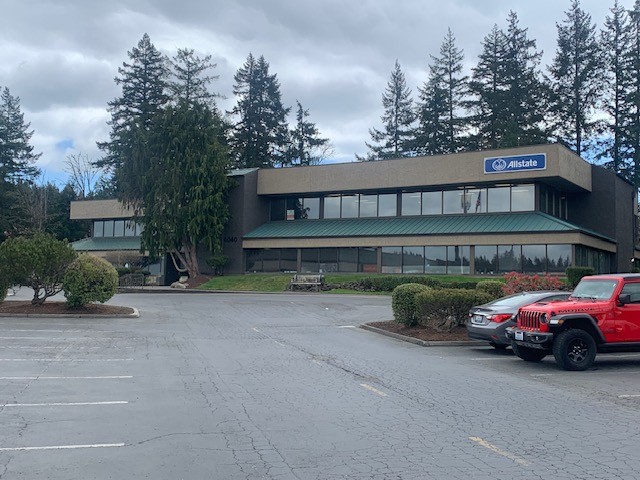
There aren’t any “Hidden Figures” here in this article. There are only forgotten and overlooked ones. This is just a story that people in power don’t want to recognize because it doesn’t support their narratives. It is romantic to tell a story of a starved boy who, in the middle of a segregated wartime town, broke into a community hall, discovered a piano, and rose to be the best-known music producer in the country. It is less appetizing to tell people that a corporate pizza restaurant franchise in a strip mall helped launch the career of a famous rap and dance artist, giving him his first taste of public feuding and the tough reputation he needed to survive in that scene. The best part is that you can go down to 4060 Wheaton Way and dance out in front of the birthplace of Maharaji without having to read a pretentious educational plaque or have people bother you. Wherever he is today, I hope that makes Harry Muller very happy.
 Whatever Happened to Value Giant

Leave a comment