If you’ve been on the Internet for any length of time, you have no doubt encountered the legend of Polybius, a highly advanced and possibly cursed video game said to have appeared in a 1980s Oregon arcade. After appearing on Coinop.org in 1998, the legend spread to GamePro’s print edition by September 2003 (“Polybius (Urban Legend)”). The game, attributed to a German company called Sinneslöschen, is described on the Coinop.org page in a way that sets up the basis of the legend. According to the entry, the game:
- Had a limited release
- Caused amnesia in kids who played it
- Gave kids nightmares
- Was produced by a small company freelancing on a possible government contract
- Attracted “men in black” who collected data on players — but only on how the game was played
- Was abstract and had puzzle elements
Later additions to the legend include:
- An all‑black case
- A single joystick
- Very fast gameplay
- No serial numbers on the machine
- Vector graphics
- Hypnotic, shifting landscapes
- Subliminal messages
- Spatial and number puzzles
- Similarities to Asteroids or Tempest
And I just read about a very similar game, published two years before the Coin-op entry was created.
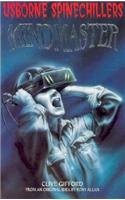
I recently signed up to steward a Little Free Library. If you’re interested, the Checkered Purple People Reader is located at 80 73rd Street, Bremerton, Washington 98311 ( #228148). I’m working on having the door repaired, and anyone is welcome to add books. The focus is on children’s books. I have a stack of titles I purchased from the local library book sale, and I feel obligated to read them before suggesting someone else does. Several were from the Usborne Spinechillers series, a UK version of Goosebumps. One was Mindmaster by Clive Gifford, published in 1996. The blurb on the back reads:
Just imagine . . . an arcade game that can read your mind and play your darkest thoughts. Just imagine . . . a machine that steals your dreams. Just imagine . . . the Mindmaster. There is no escape.
Whatever I was supposed to get out of this description, very little of it was reflected in the book. Instead, I found a story about a boy, Pete Clark, who is suffering from PTSD after a car crash that killed his father, while also dealing with a pair of bullying siblings. He loves soccer but is lured away to a shady arcade called The Zone. There, a teenage boy who monitors the machines befriends him and teaches him “tips” for hacking the games. The teenager, Rick, tells Pete he has “natural talent,” and Pete is introduced to a set of experimental games in the “Inner Zone.” Created by the owner, Martin Kagor, the games are all in unmarked plain black cabinets with no decorations. The first game, The Aggressor, is described this way: “[It had a] plain black console . . . It didn’t look very impressive. If anything, it looked homemade. But it was expensive to play—double the price of other games in the arcade.” (Gifford 24)
Pete is drawn to a large game console called Mindmaster. While it has two elements not present in the Polybius legend, Mindmaster operates almost identically to the Polybius arcade cabinet. It selects a game called Samurai Wars for Pete before settling on another game, The Aggressor. Both are fighters similar to Mortal Kombat. Pete quickly becomes hooked on the console. He neglects his friend Jez, his little brother Tommy, and his beloved soccer team. In addition to experiencing amnesia, Pete grows aggressive and begins having nightmares. He discovers a mysterious notebook kept by his bully and former arcade employee Stefan Bremner:
The first part of the notebook was full of tips for the latest arcade games . . . There were a couple of empty pages, then a page with a single line which read Mindmaster: Never Cross the Void. The back section of the notebook looked like a coded message: rows of numbers and letters that didn’t make any sense. Perhaps it was a computer program, though he couldn’t imagine Stefan being an accomplished computer buff. (57–58)
Stefan is later murdered, and Pete’s family home is vandalized by someone trying to retrieve the missing notebook full of data. Rick finds Pete to tell him that Kagor is working on a dangerous new game, also called Mindmaster. While searching for his missing little brother Tommy, Pete returns to The Zone and finds Rick passed out in the Inner Zone, his brain partly uploaded into the Mindmaster game. Pete endures a fast‑paced game with puzzle elements to save Rick. Kagor is arrested for murdering Stefan, and things slowly return to normal.
It appears Mindmaster was published in 1996–97. That’s it. It is oddly violent for an Usborne Spinechiller book, but it is also better written than most titles. Why isn’t it more common in libraries? Probably due to the Columbine massacre, which happened two years later. But I think the existence of the book puts a nail in the coffin of the idea that a real-life Polybius game exists somewhere. The author of the Coinop.org article was probably familiar with Mindmaster, possibly a book read by one of their kids or younger siblings. Because the Polybius entry sounds enough like the novel, others began adding details they vaguely recalled from a similar story.
This is not an unheard‑of occurrence. For years, the Lost Media community investigated a supposedly lost PC farming game called The Evil Farming Game. Similar to Harvest Moon, the game followed the life of a farmer who had murdered his wife and buried her body on the farm. After a user mentioned it on r/TipOfMyTongue, more people swore they recalled playing it. What were they recalling? Was it possible for so many people to remember something that didn’t exist? Kind of. The game was an idea described in a Vinesauce Joel stream, which was misremembered as a real game (DeLeon). I suspect Polybius is the same phenomenon.
Sources
DeLeon, Noah. “The 5‑Year Mystery of the Evil Farming Game Has Been Solved.” Vice, 18
Oct. 2023. https://www.vice.com/en/article/the-5-year-mystery-of-the-evil-farming-
game-has-been-solved/
Gifford, Clive. Mindmaster. Usborne Spinechillers. Ed. Gaby Waters and Michelle Bates.
London: Usborne Publishing, Ltd. 1996.
“Polybius.” Coinop.org, 2000,
web.archive.org/web/20000303224844/http://www.clickto.com/coinop/GamePage/Polybius.html.
“Polybius (Urban Legend).” Wikipedia, Wikimedia Foundation,